The August 8, 2023, Lahaina fire was the worst thing to happen to West Maui since the overthrow of the Hawaiian Kingdom in the late nineteenth century. The fire was a tragic disaster, but it didn’t simply happen due to random chance. The conditions that made West Maui ripe for destruction by uncontrolled fire date back more than a century. I know this because I spent a dozen years reporting about politics and society on Maui, which often impacted West Maui, for one of the last alternative newsweeklies in Hawai‘i.
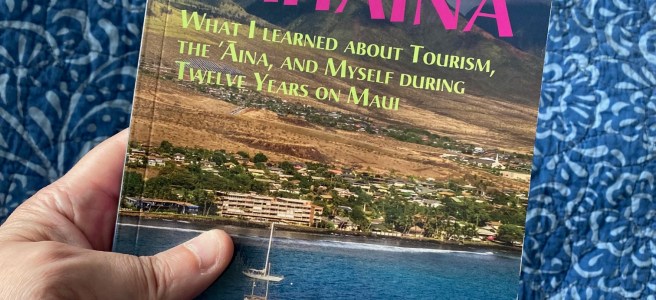
Since 2018 I’ve lived in Southern California, but I watched the fire unfold on social media and television news. I then spent the next two months remotely reporting almost nonstop on the aftermath and immediate recovery of Lahaina for MauiTime, my old paper. After watching Hawai‘i’s governor shame West Maui residents into going back to work in luxury resorts just a few months after the fire robbed many of them of their homes, pets, jobs, and even family members, I realized that I needed to write this book, which I titled Remembering Lahaina: What I Learned about Tourism, the ‘Āina, and Myself during Twelve Years on Maui.
I had been thinking about putting together something about my time on Maui in the months prior to the fire, but couldn’t come up with a theme linking everything I saw and learned. But after the fire, my thinking became much clearer.
From going undercover at an Olowalu gathering to learn more about land-developer marketing plans to walking through Kā‘anapali parking lots to see how resorts were keeping residents from the coastline, I had immersed himself in West Maui political life during my years at MauiTime. Along the way I wrote about the redevelopment of the old Pioneer Mill plantation, the controversial West Maui sewage treatment plant that ended up in the U.S. Supreme Court, and the endlessly seductive ways multinational corporations used to lure ever-greater numbers of tourists to the island.
This is why I wrote this book — I wanted to show some of the conditions that made the 2023 fire possible, as well as why Lahaina’s recovery will be so difficult and time-consuming. And please understand, this book wasn’t easy to put together. Though it’s based heavily on stories and dispatches I wrote years or even decades ago (none of which are online anymore, by the way), it is most definitely an entirely new work.
It’s important to keep in mind that that is not a conventionally structured memoir. It’s basically a series of essays, each centered on something I learned and why Maui is the way it is: politically, socially, and economically. But as I began writing this book, I realized that my time on Maui had also changed me, teaching me about culture, history, racism, misogyny, and my own biases, which I did my best to recount here. I wanted the book written a certain way, and I’m very glad that I found a publisher willing to allow that.
In fact, I am very thankful to the North Beach-West Maui Benefit Fund and UH Press, which agreed to publish this book. The Fund has done tremendous work for West Maui residents for a few decades now, and I came to rely on the books and materials they published when I was at MauiTime. It’s truly an honor to have them publish this.
You can buy the book here.


